How to Read a Japanese Chain's Allergen Chart
Published: 2026-07-24 ・ Last updated: 2026-09-20
Japan's mandatory allergen labeling applies to packaged processed foods, not to food served in restaurants — see our overview of Japan's allergen labeling system. Yet most major chains voluntarily publish an allergen chart, called an arerugen ichiranhyō (アレルゲン一覧表): a big matrix of menu items against allergens, usually as a PDF or a searchable web table. These charts are the single best written source of allergen information for eating out in Japan — if you know how to read them. Here is how, as of July 2026.
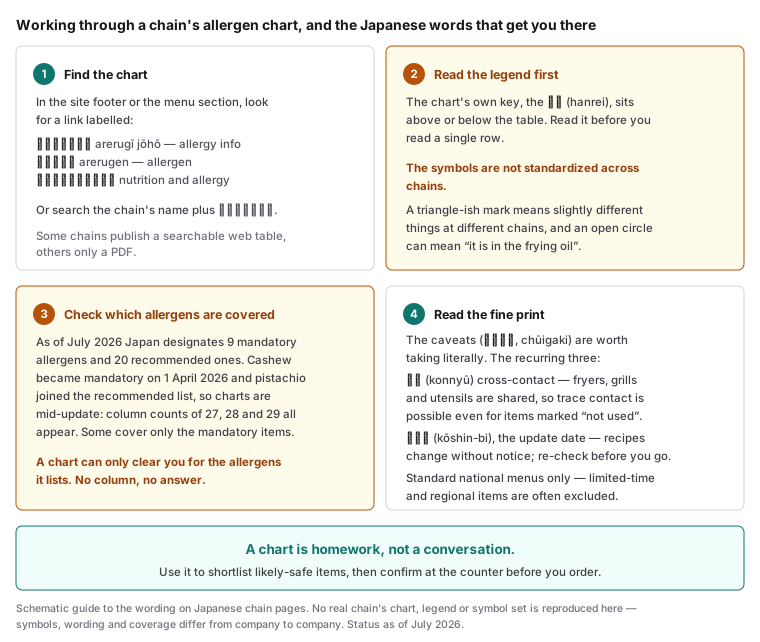
Where to find a chart
On a chain's official site, look in the footer or the menu section for links labeled アレルギー情報 (arerugī jōhō, "allergy information"), アレルゲン (allergen), or 栄養成分・アレルギー (nutrition and allergy). A web search for the chain's name plus アレルゲン一覧 usually lands on the right page. Some chains offer an interactive search where you tick allergens and get a filtered menu list; others publish only a PDF. Our chain search collects menu-level allergen information and links to official sources for chains across Japan, so it is a practical starting point when you do not know a chain's site.
The matrix and its legend
The typical layout is rows of menu items and columns of allergens, with a symbol in each cell. The crucial point: the symbols are not standardized across chains. Two real examples, both from official pages as of July 2026:
| Chain | Symbols used | Meaning |
|---|---|---|
| McDonald's Japan | ●, ○, ▲, × | ● used as an ingredient (excluding frying oil); ○ present in the frying oil; ▲ shared lines or contact during preparation; × not used |
| Sukiya | ●, △, ー | ● used as an ingredient; △ made on shared factory lines; ー not used as an ingredient |
Chains move these files without notice — Sukiya's chart changed host between this article's first version and August 2026 — so if a link in the sources below no longer opens, our pages for McDonald's and Sukiya carry each chain's current chart link, which we re-check on a schedule. Note that the same triangle-ish mark means slightly different things at each chain, and an open circle — harmless-looking elsewhere — means "it is in the frying oil" at McDonald's. Never carry a legend from one chain to another. Always find the chart's own legend, the hanrei (凡例), usually printed above or below the table, and read it first.
Check which allergens the chart actually covers
As of July 2026, Japan designates 9 mandatory allergens and 20 recommended ones. Cashew nuts became mandatory on April 1, 2026, with a two-year transition period, and pistachio was added to the recommended list at the same time — so charts are in mid-update, and column counts of 27, 28, or 29 all appear in the wild. Some charts cover only the mandatory items.
A chart only provides information for the allergens it lists; it does not establish that a dish is safe for you. If your allergen — say, sesame or banana, both merely recommended — has no column, the chart's silence proves nothing. Check the column headers and the legend to understand what an unmarked cell means.
Read the fine print
Nearly every chart carries caveats (chūigaki 注意書き), and they are worth taking literally. Common ones:
- Cross-contact (konnyū 混入): fryers, grills, and utensils are shared in kitchens, so trace contact is possible even for items marked "not used". Sukiya's chart, for example, states plainly that shared equipment can cause unintended contact and that the chart is no guarantee against symptoms. Japanese kitchens also have their own hidden ingredients — see our guide to hidden allergens in Japanese cuisine.
- "May change without notice": recipes and suppliers change. Check the chart's update date (kōshin-bi 更新日) and re-check before each visit; McDonald's and Sukiya both explicitly ask customers to do so.
- Standard menus only: charts typically cover national regular menus. Limited-time, regional, and store-prepared items are often excluded or footnoted.
Use the chart, then talk to the staff
Use the chart to prepare questions about ingredients and preparation, then confirm those details with the restaurant before ordering — our guide to communicating allergies at Japanese restaurants has phrases that work, and an allergy card in Japanese carries your question into the kitchen intact. And if you cannot find a chain's chart at all, look the chain up in our search, which links to official sources where available and records the checked locations and other ways to ask when we have not found published allergen information.
References
- Consumer Affairs Agency of Japan, information page on food allergen labelling (in Japanese)
- Consumer Affairs Agency of Japan, Food Labelling Division notice on labelling of foods containing allergens, April 1, 2026 (in Japanese)
- McDonald's Japan, allergen information chart and symbol guide (in Japanese)
- Sukiya (Zensho Holdings), allergen chart PDF (in Japanese)
This article is for general information purposes and is not medical advice. While we strive for accuracy, regulations and company disclosures may change. Always check the latest official information from the restaurant before eating.