How to Communicate Your Food Allergy at Restaurants in Japan
Published: 2026-07-23 ・ Last updated: 2026-08-07
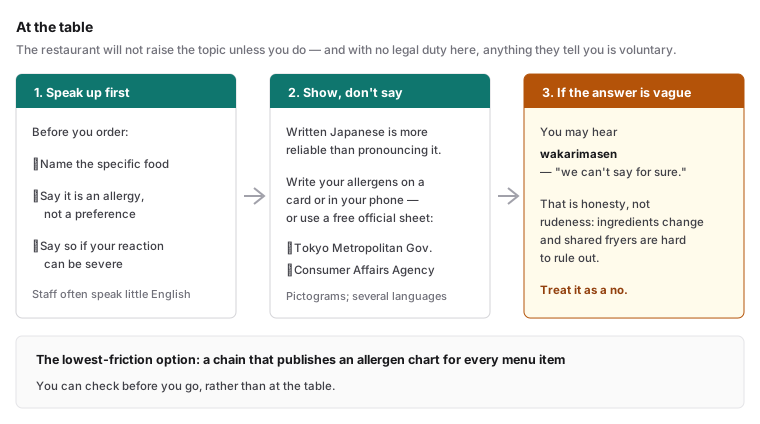
Eating out in Japan with a food allergy is very doable, but know one thing up front: the restaurant will not raise the topic unless you do. Japan's mandatory allergen labeling covers packaged processed foods only — restaurants have no legal duty to provide allergen information, so anything they tell you is voluntary. Staff often speak little English, and if you say nothing, they cannot help you. A few prepared words, or a card to show, close that gap.
Phrases that get the message across
Speak up before you order, name the specific food, and make clear it is an allergy, not a preference — and if your reaction can be severe, say so.
Replace ◯◯ with a word from the allergen table.
| Japanese | How to say it | Meaning |
|---|---|---|
| 私は◯◯アレルギーです。 | Watashi wa ◯◯ arerugī desu. | I have a ◯◯ allergy. |
| これに◯◯は入っていますか? | Kore ni ◯◯ wa haitte imasu ka? | Does this contain ◯◯? |
| ◯◯を食べると具合が悪くなります。 | ◯◯ o taberu to guai ga waruku narimasu. | I get sick if I eat ◯◯. |
| 少しでも食べられません。 | Sukoshi demo taberaremasen. | I cannot eat even a small amount. |
| ◯◯抜きでお願いできますか? | ◯◯ nuki de onegai dekimasu ka? | Could you make it without ◯◯? |
| アレルギーの一覧表はありますか? | Arerugī no ichiranhyō wa arimasu ka? | Do you have an allergen chart? |
Allergen names in Japanese
| English | Japanese | How to say it |
|---|---|---|
| Egg | 卵 | tamago |
| Milk / dairy | 乳・牛乳 | nyū / gyūnyū |
| Wheat | 小麦 | komugi |
| Buckwheat | そば | soba |
| Peanut | 落花生・ピーナッツ | rakkasei / pīnattsu |
| Shrimp | えび | ebi |
| Crab | かに | kani |
| Walnut | くるみ | kurumi |
| Cashew | カシューナッツ | kashū nattsu |
| Sesame | ごま | goma |
| Fish | 魚 | sakana |
| Soy | 大豆 | daizu |
Show, don't say: allergy cards you can carry
Showing written Japanese is more reliable than pronouncing it. Write your allergens in Japanese on a card or in your phone notes — or use an official tool made exactly for this:
- The Tokyo Metropolitan Government publishes a free Food Allergy Communication Sheet (アレルギーコミュニケーションシート): mark your allergens and hand it to staff. It uses pictograms, and multilingual versions cover English, Chinese, Korean, Thai, French, Spanish, German and Russian.
- The Consumer Affairs Agency offers a smartphone version in English, Chinese and Korean: save it on your phone, check off your allergens, and show the screen.
If the answer is vague, treat it as a no
Staff may answer wakarimasen — "we can't say for sure." That is honesty, not rudeness: ingredients change and shared fryers are hard to rule out, so a careful restaurant will not promise what it cannot guarantee. When the answer is vague, the safe move is another dish or another restaurant. The lowest-friction option is a chain that publishes an allergen chart for every menu item — you can find restaurants with official allergen information before you go, and our guides to eating out in Japan with food allergies and Japan's allergen labeling basics explain what those charts cover.
Emergency basics
Carry any emergency medication you have been prescribed, and follow the plan agreed with your doctor on when and how to use it. In Japan, dial 119 for an ambulance — the service is available to anyone in the country, and if Japanese speakers are nearby, ask them to help you call.
References
- Consumer Affairs Agency of Japan, food allergen labeling overview (in Japanese)
- Consumer Affairs Agency of Japan, food allergy when eating out (in Japanese)
- Tokyo Metropolitan Government, Food Allergy Communication Sheet download page (in Japanese)
- Consumer Affairs Agency of Japan, smartphone Food Allergy Communication Sheet (Japanese page; English, Chinese and Korean sheets)
- Fire and Disaster Management Agency, Guide for Ambulance Services (multilingual)
This article is for general information purposes and is not medical advice. While we strive for accuracy, regulations and company disclosures may change. Always check the latest official information from the restaurant before eating.