Shellfish and Fish Allergies in Japan: A Different Map from Home
Published: 2026-08-01 ・ Last updated: 2026-08-18
If your allergy is to "shellfish" or "fish", you arrive in Japan with categories that Japanese labeling law simply does not use. The US labels crustacean shellfish and fish as whole groups; the EU adds molluscs as a third. Japan's list, set out in the Consumer Affairs Agency's April 2026 handbook, names individual species instead — and puts them in different tiers, or leaves them off entirely. Before you trust any allergen chart (ichiranhyō) here, it is worth redrawing your map.
How your home category translates
| Your category | Japan's items | Tier |
|---|---|---|
| Crustaceans | shrimp (ebi えび), crab (kani かに) | Mandatory, listed separately |
| Molluscs | squid (ika いか), abalone (awabi あわび) | Voluntary only |
| Fish | salmon (sake さけ), mackerel (saba さば), salmon roe (ikura いくら) | Voluntary only |
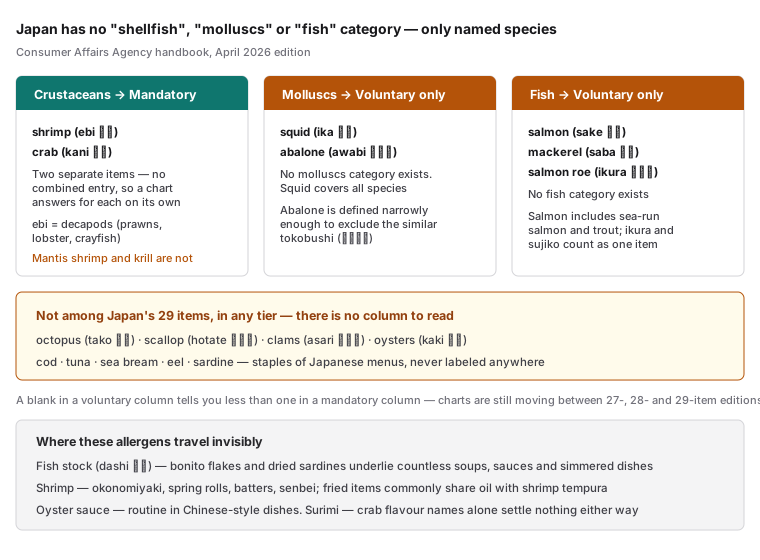
Shrimp and crab are two of Japan's 9 mandatory allergens — there is no combined "crustaceans" entry, so a chart answers for each separately. The handbook defines ebi broadly as decapods, including prawns, lobster, and crayfish; notably, mantis shrimp (shako しゃこ, a sushi topping) and krill are classed as other crustaceans and fall outside the item. Kani covers king, snow, and other crabs.
There is no molluscs category at all. Squid (all species) and abalone are individual voluntary items — and abalone is defined so narrowly that the similar tokobushi (とこぶし) is excluded. Octopus (tako たこ), scallop (hotate ほたて), clams (asari あさり) and oysters (kaki かき) are not among Japan's 29 items in any tier.
Fish fares the same: no category exists. Only salmon (including sea-run salmon and trout; ikura and sujiko roe count as one item) and mackerel appear, both voluntary. Cod, tuna, sea bream, eel, sardine — staples of Japanese menus — are never labeled anywhere.
What a blank cell means for you
On a Japanese chart, mandatory and voluntary tiers behave differently. Shrimp and crab columns, when a chain publishes a chart, reflect an item the law obliges packaged-food makers to declare — though restaurant food itself sits entirely outside the labeling law, so even those columns are voluntary disclosure. For squid, abalone, salmon or mackerel, a blank tells you even less: charts are still transitioning between 27-, 28- and 29-item editions, and a voluntary item may be silently omitted rather than absent. And for octopus, oyster, tuna or cod, there is no column to read — the question was never asked. The general mechanics are covered in how to read Japanese allergen charts and the fuller item-by-item comparison with US and EU lists.
Where these allergens travel in the cuisine
The gap matters most for ingredients that move invisibly through dishes:
- Fish stock (dashi だし) — bonito flakes (katsuobushi かつお節) and dried sardines (niboshi 煮干し) underlie countless soups, sauces, and simmered dishes, and since fish is not a covered category, no chart column accounts for them. See hidden allergens in Japanese cuisine for the wider dashi picture.
- Shrimp turns up in okonomiyaki, spring rolls, fried-food batters and rice crackers (senbei), and fried items commonly share oil with shrimp tempura.
- Oyster sauce is a routine seasoning in Chinese-style dishes — and oyster is not a covered item.
- Crab sticks and other surimi products are typically fish paste, sometimes crab-flavored, sometimes containing crab-derived ingredients; on packaging, actual crab content must be declared, but flavor names alone do not settle it either way.
Sushi and ramen concentrate several of these questions in one meal — ramen and sushi safety walks through them dish by dish.
Asking what the chart cannot answer
For anything outside the 29 items — octopus, scallop, oyster, white fish, dashi — the only route is asking the restaurant directly, ideally in writing; phrase cards for allergies cover the wording. Whether a given reaction risk extends across species or categories is a question for your doctor, not a label.
When you search chains on this site, the region selector translates for you in the same direction as the table above: choosing the US or EU view maps crustaceans onto the shrimp and crab columns, molluscs onto squid and abalone, and fish onto salmon, mackerel and salmon roe — and nothing else, because nothing else exists in the Japanese data. The chain search and the data guide show exactly which items each chain's own chart covers.
References
This article is for general information purposes and is not medical advice. While we strive for accuracy, regulations and company disclosures may change. Always check the latest official information from the restaurant before eating.